DancheongStudio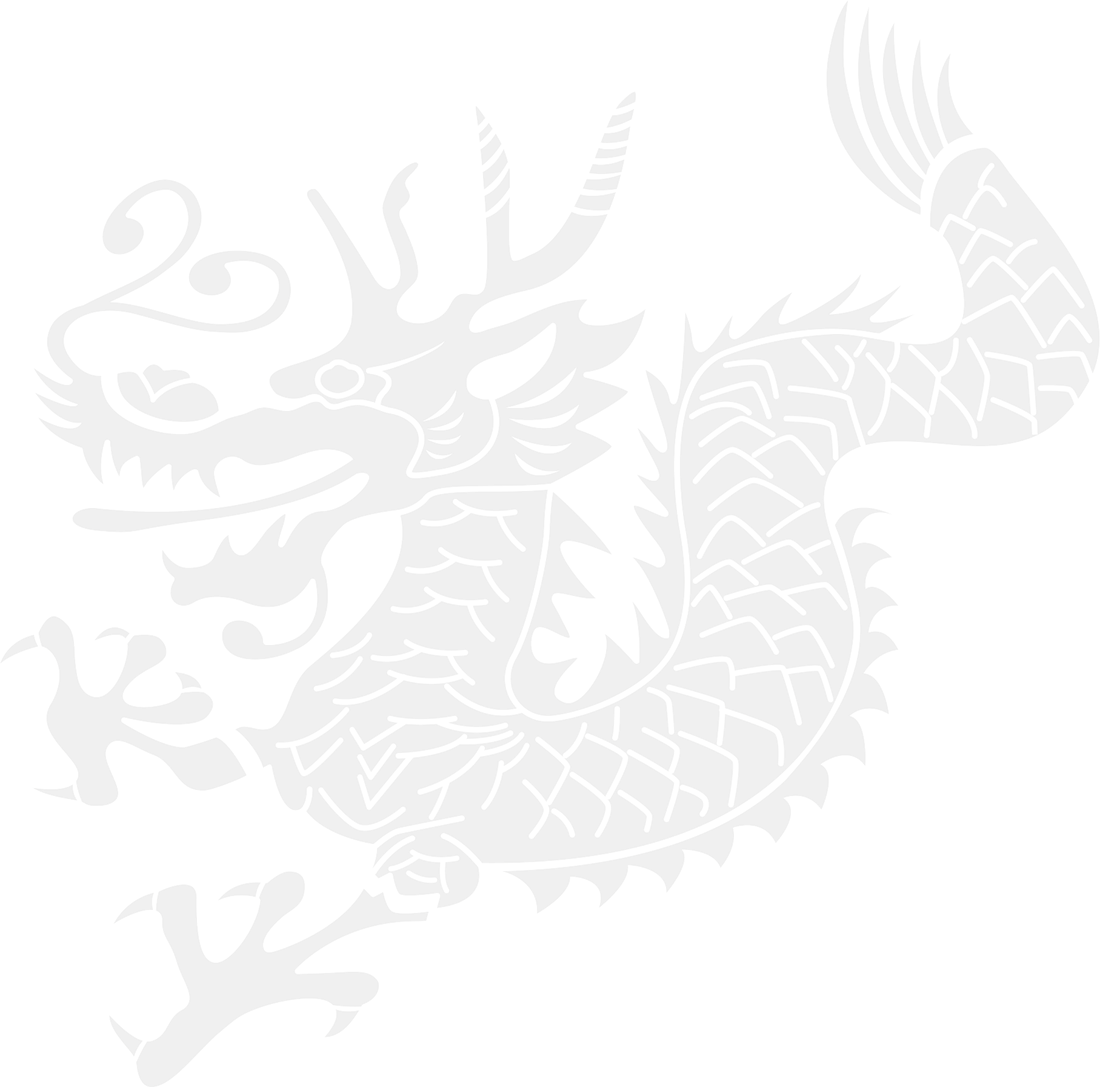
Entry 05 / 12
Dragon
용문 · yong-mun
Rain-bringer and royal emblem; the king's robe, the throne-hall ceiling, the blue-and-white jar.
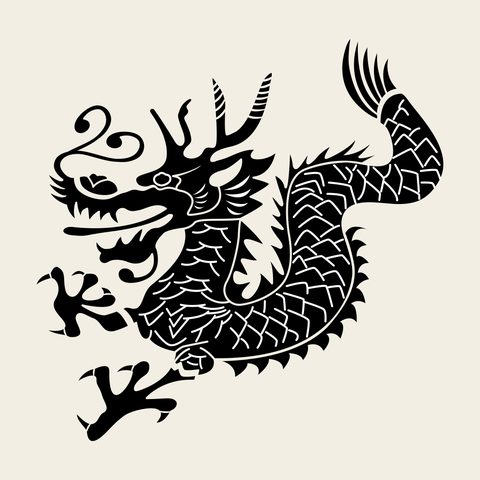
In Korea the dragon is a benevolent water spirit — it lives in rivers and clouds and brings rain — and from that it became the emblem of the king, who mediates between heaven and the people. Joseon kings wore round dragon badges on the chest, shoulders and back of the royal robe (gollyongpo), and a pair of dragons carved in the ceiling above the throne in Geunjeongjeon hall of Gyeongbokgung look down on the court.
Dragons also guard buildings against fire: a dragon in a roof ridge or a temple beam is there because it commands water. Seventeenth- and eighteenth-century blue-and-white 'dragon jars' (yongjun), painted with a single writhing dragon among clouds, were made for palace ceremonies, and folk painters later borrowed the motif for New Year door pictures.
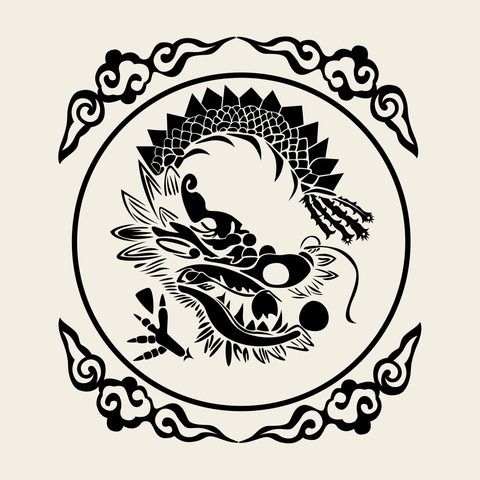
The dragon in Vol.02 comes from the national pattern archive; Vol.04 adds a dragon coiled inside a cloud roundel. Both work as centrepieces and medallions — paired with the cloud vectors from Vol.04 you can build the full 'dragon among clouds' composition.
Vector examples
From the packs
Original colours on a cream ground. Labels give the working name, the source title and number in the national archive, and the pack.

Get the vectors