DancheongStudio
Entry 10 / 12
Tortoise Shell & Lattice
귀갑문 · 문살 · gwigap-mun, munsal
The hexagon net of a ten-thousand-year tortoise; Korea's oldest and most perfect repeat.
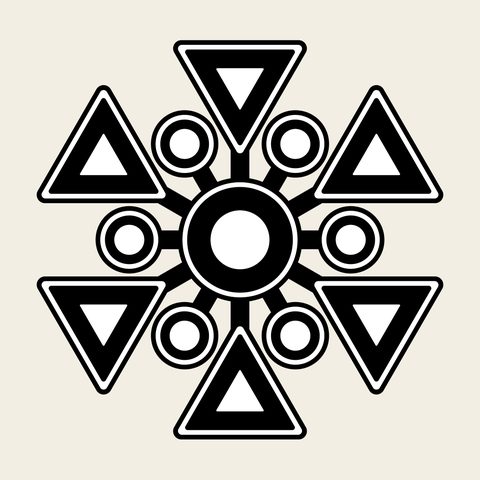
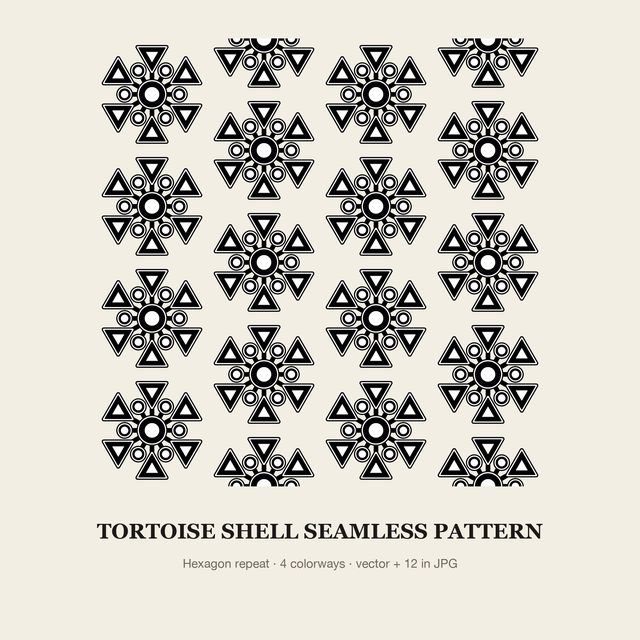
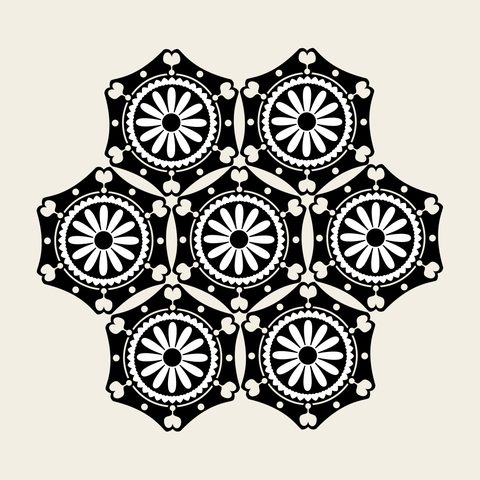
The hexagonal net called gwigap-mun imitates the plates of a tortoise shell, and through the tortoise it means long life — the animal is one of the Ten Longevity Symbols and was thought to live ten thousand years. It is one of Korea's oldest geometric patterns, found on Silla gilt-bronze fittings, Goryeo lacquerware and bronze mirrors, and everywhere on Joseon furniture, brassware and woven textiles.
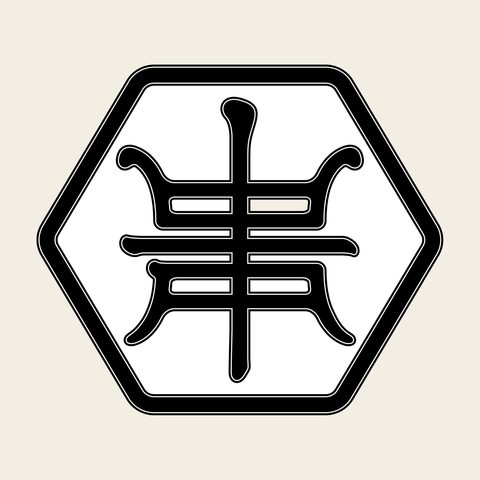
Craftsmen rarely left the hexagons empty. A small flower or a longevity character sits inside each cell, or the cells are drawn double as a 'tortoise-shell flower' pattern. The same instinct produced Korea's lattice window screens (munsal): plain grids on houses, and on temple doors — like the flower-lattice doors of Naesosa temple, included in Vol.01 — dense carved flowers filling every intersection.
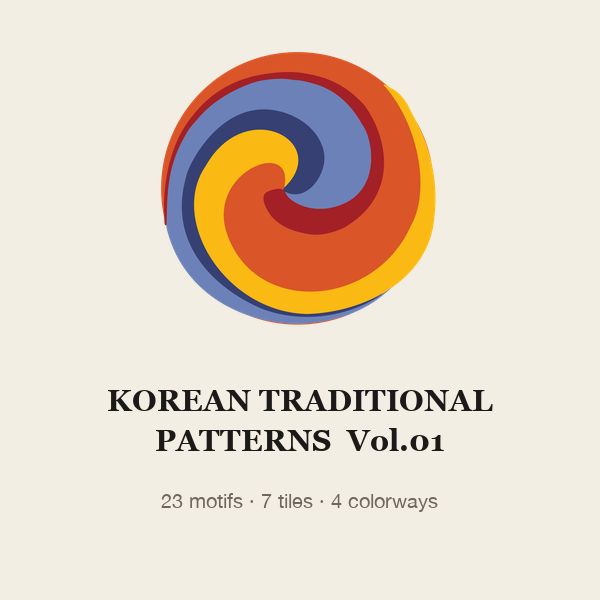
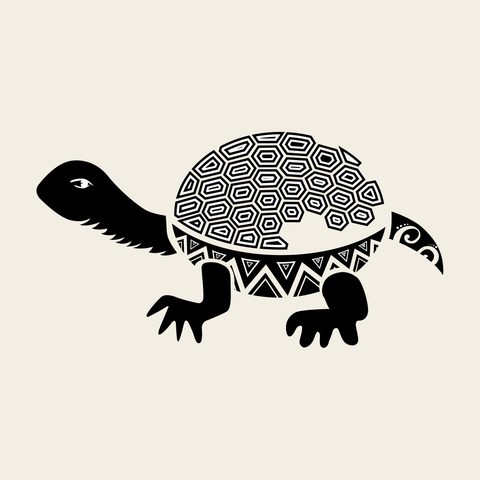
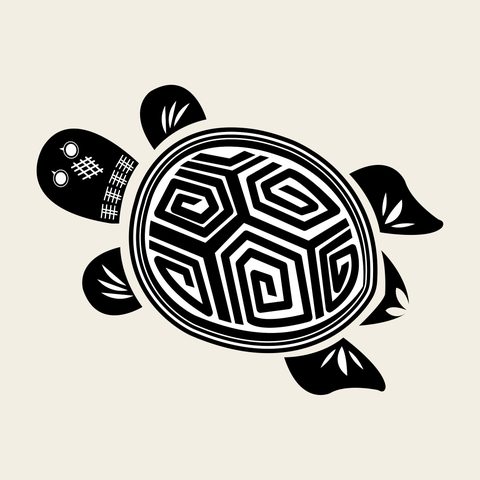
For pattern work the hexagon is the perfect repeat: it tiles with no gaps and no visible rows. The tortoise-shell tile in Vol.01 (also sold separately with 12×12 in digital papers) and the longevity-hexagon half-drop in Vol.03 are the two seamless versions; the turtle motifs themselves come from Vol.02 and Vol.03.
Vector examples
From the packs
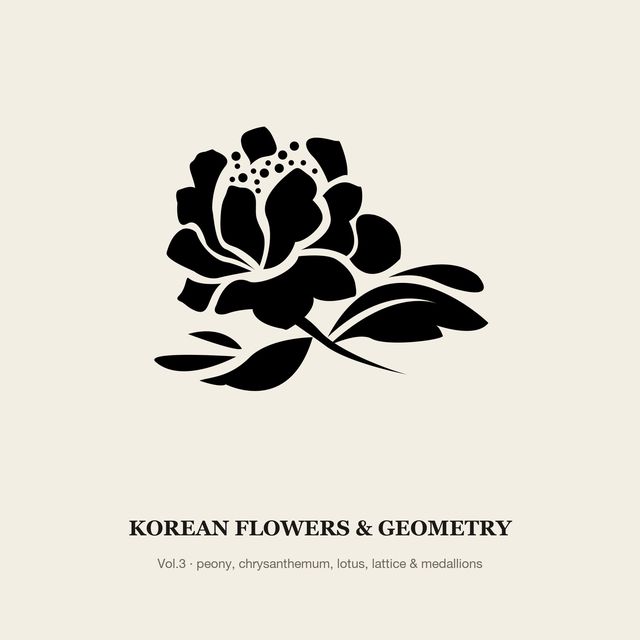
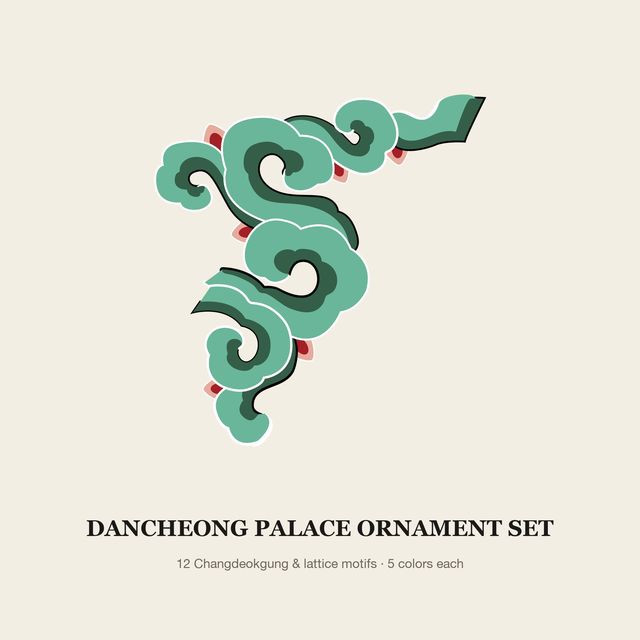
Original colours on a cream ground. Labels give the working name, the source title and number in the national archive, and the pack.

Get the vectors