DancheongStudio
Entry 11 / 12
Auspicious Characters
문자문 · 壽 福 囍 · munja-mun
Words made beautiful — long life, good fortune and double joy stamped on every household object.
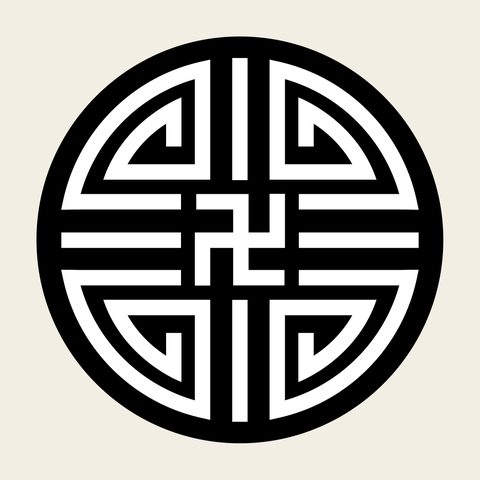
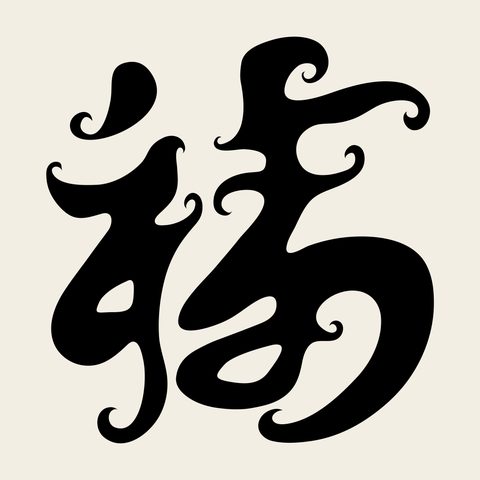
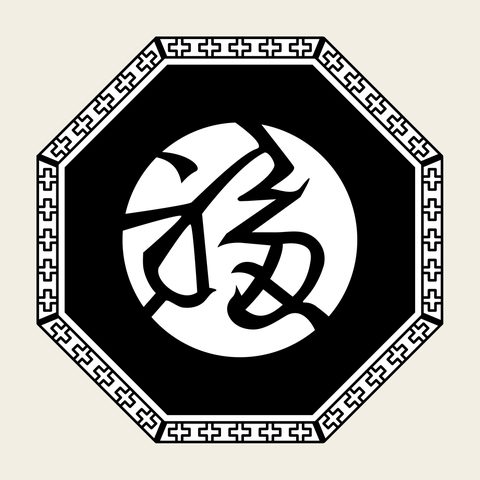
Some Korean patterns are simply words made beautiful. The character su (壽, long life) and bok (福, good fortune) were stylised into roundels, squares, octagons and pinwheels and applied to almost every object in a Joseon household: quilt covers and pillow ends, wrapping cloths, spoon cases, wooden rice-cake stamps (tteoksal), mother-of-pearl chests and the brass fittings of furniture.
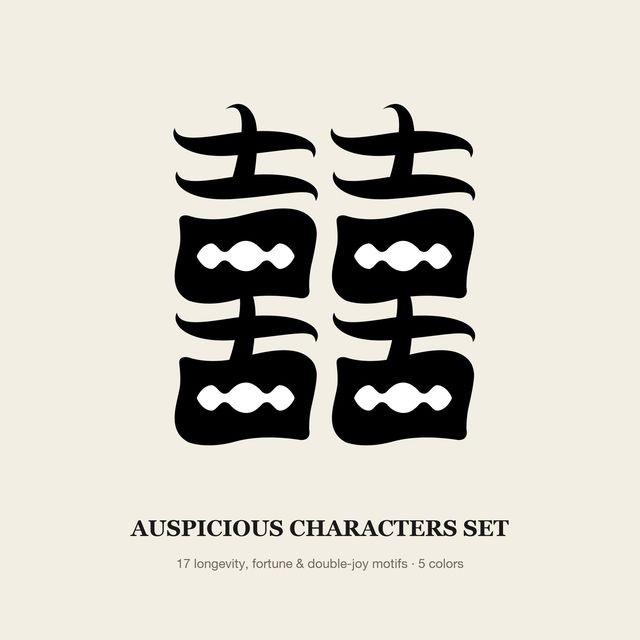
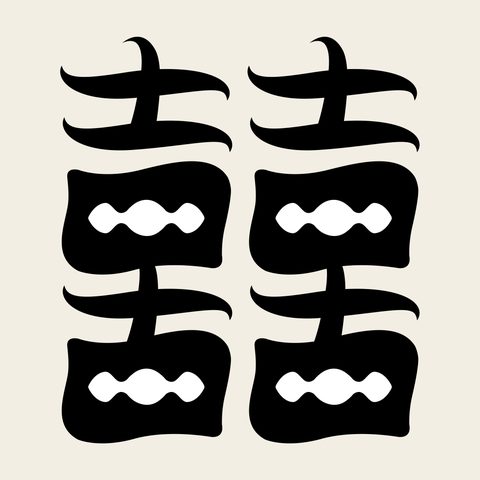
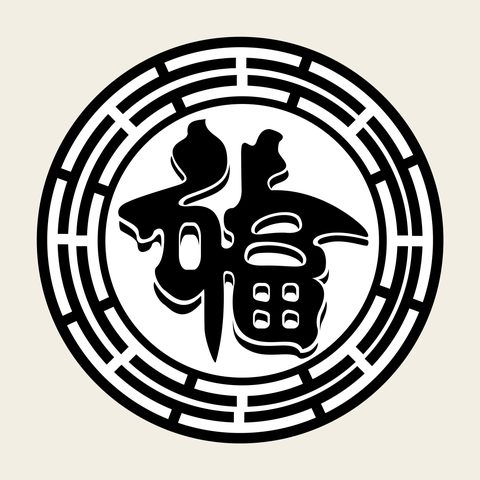
The most spectacular form is the baeksu-baekbok screen — 'a hundred su and a hundred bok' — in which every panel is filled with variant forms of the two characters, each written differently. The doubled character hui (囍, double joy) marks weddings; a (亞) and the Buddhist swastika (卐, man) frame lattices and borders; and Sanskrit seed syllables (beomja-mun) decorate temple bells and roof tiles as protective charms.
Because they are already flat, symmetrical and enclosed, character motifs behave like geometric ornament and tile well — Vol.02 includes grid repeats of bok and double joy and a half-drop of the Sanskrit roundel. They also read as instant 'Korean' signifiers on packaging for food, cosmetics and gifts.
Vector examples
From the packs
Original colours on a cream ground. Labels give the working name, the source title and number in the national archive, and the pack.
Get the vectors